

The fun and effective way to help your pet live a happier and healthier life!
Weight Matters!
It is estimated that 59% of dogs and 39% of cats in the UK are overweight or obese. Obesity in pets is one of our biggest worries for our patients. Keeping pets at their ideal weight can be a challenge, but it’s really important for their long-term health and well-being. Experts agree that pets who are maintained at their ideal weight throughout their life will live healthier and longer lives!
Being overweight increases the risk of your pet developing a range of other conditions and diseases such as:
- Diabetes
- Joint, bone and ligament damage
- Heart disease
- Tumours
- Liver disease
- Respiratory difficulties
- Urinary diseases
Why Do Pets Become Overweight?
There are a range of factors that contribute to pets becoming overweight or obese. By understanding what factors contribute to your pet’s weight gain, you’re in a better position to avoid them in future:
- Over Feeding
Your pet’s ideal calorie intake will be influence by a range of factors such as their size, age and lifestyle. If your pet’s actual calorie intake is higher than required, these extra calories will be stored as fat. It is also possible to get differences in metabolic rates between pets, so it’s a good idea to use a tailored nutritional plan specifically for your pet. - Treats
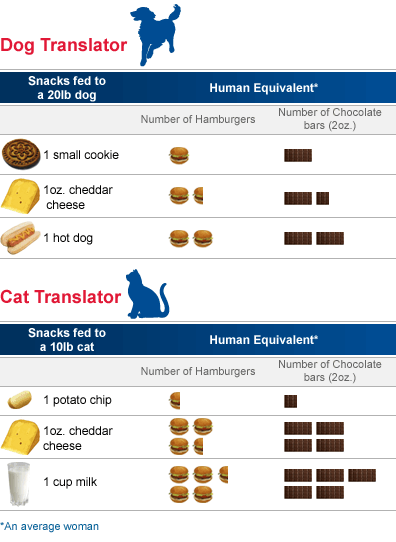
Treats will add additional calories so it’s important to ensure that these additional calories are taken into account by reducing the amount of other food accordingly. Feeding human food should also be avoided as the calorie content will be higher. For example, feeding 1 digestive biscuit to a dog would be the equivalent of a human eating a chocolate covered doughnut! - Lack of Exercise
Your pet’s activity will play an important role in maintaining a healthy weight. It’s important they get enough exercise to burn the calories they get each day from their food. Pets that are less active will use less calories and can be more likely to over-eat because they are bored. The type of exercise your pet does can be adapted to your pet’s ability and the time and environment you have to exercise them. - Neutering
Neutering has a range of health benefits for your pet but can result in metabolic changes meaning that they require less calories. It is therefore beneficial to switch your pet to a food specifically from formulated for neutered pets post-neutering.
Weight Loss Diets

Your vet or vet nurse will devise a personalised weight loss programme for your pet using a weight management diet from the VETERINARY HPM Clinical Diet range for dogs and cats. These diets are designed to be tasty and meet all of your pet’s nutritional needs, whilst helping to lose weight in a controlled way.
Pet owners often ask why they can’t just give less of the food they currently feed to help their pets lose weight. The reason your vet or vet nurse has recommended a specific weight management diet is because they have been carefully designed to ensure your pet receives all the nutrients they need to stay healthy, but with a reduced calorie content for weight loss. They’re also formulated to ensure your pet still gets a satisfying meal so they are less likely to feel hungry.
Diets Available:
VETERINARY HPM Weight Loss & Diabetes
For obese dogs & cats (>30% excess weight)
- Low Calorie Content
Low calorie content helps achieve rapid weight loss whilst your pet still feels full.
- Improves Lean Mass/Fat Mass Ratio
High Protein – Low Carbohydrate (HP-LC) formulation helps preserve lean mass and decrease fat mass during weight loss.
- Joint Support
Addition of chondroitin sulphate and chitosan can help to support joints aggrevated by excess weight.
- Promotes Satiety
High crude fibre content, especially insoluble fibres, in association with high level of protein, helps your pet feel full.
- Fat Burning
Added L-carnitine, a fat burning ingredient, helps your pet to use up fat reserves during weight loss.
- Limits the risk of Feline Lower Urinary Tract Disease (in cats)
Stimulates water intake, increasing urine volume and frequency of urination whilst also favouring urine dilution.

VETERINARY HPM Weight Loss & Control
For overweight dogs & cats (<30% excess weight) and weight stabilisation after weight loss
- Controlled Calorie Content
Lower calorie content helps achieve soft weight loss.
- Moderate Restriction f Daily Ration
Ideal for soft weight loss allowing the feeding of moderate daily rations.
- Improves Lean Mass/Fat Mass Ratio
High Protein – Low Carbohydrate (HP-LC) formulation helps preserve lean mass during weight loss and maintain ideal body composition after weight loss.
- Fat Burning
Added L-carnitine, a fat burning ingredient, helps your pet to use up fat reserves during weight loss.
- Increased Fibre
Fibre helps promote satiety and regulate starch digestion and absorption.
- Limits the risk of Feline Lower Urinary Tract Disease (in cats)
Stimulates water intake, increasing urine volume and frequency of urination whilst also favouring urine dilution.
Weight vs Shape
Our pets come in all different shapes and sizes so it can be difficult to say what the ideal weight would be for every dog and cat. Weighing pets therefore isn’t always the best way to determine if they are overweight or not. Instead it is better to look at their shape, as whilst dog’s weight can vary between individuals even of the same breed, a healthy shape will be the same for most dogs.

Body Condition Scoring (BCS) is a technique used to determine whether a pet is above or below their ideal weight by looking at their body shape. Your vets or vet nurse will assess your pet’s body condition score as well their current weight and body measurements.

Getting Started
Your vet or vet nurse will recommend how much food to feed initially. This amount may be altered throughout the weight loss programme depending on your pet’s progress, so it’s important to attend your veterinary practice frequently for follow-up visits.
Whilst on a weight loss programme it is particularly important to weigh your pet’s daily amount of food using scales, rather than using measuring cups, as these have been shown to vary by as much as 20%. This could mean the difference between success and failure for your pet’s weight loss regime.
Get Everyone Involved!
For your pet’s weight loss programme to be successful, it’s really important that everyone who has contact with your pet knows about it. This way you can ensure your pet is only being fed their allocated daily rations – just a few sneaky treats will make a difference! Friends and family can also support the programme by helping with extra exercise.
Treats
If you want to give your pet treats, use some of their daily portion of food. Your pet will be just as happy with this as any other treat which may contain lots of excess calories.
Transition Gradually!
Change over to VETERINARY HPM over a period of 5-7days.
Whenever you change your pet’s food, it is important to do so gradually for two reasons:
It will take a few days for your pet’s digestive system to get used to any new food. Changing too quickly can lead to dietary upsets, especially diarrhoea.
Many pets are “neophobic” i.e. they don’t like anything new, so will turn their nose up at anything but their normal food. This is not a reflection on the appeal of the new food, and these pets will accept the new food when it is initially introduced in small quantities.
GET ACTIVE!
As long as your pet has been health checked by your vet, increasing their activity is an important part of the weight management programme.
Exercising Dogs
Generally speaking frequent short walks are better than one long walk. If you have limited time, your dog will work much harder chasing a ball than walking with you on the lead. If your dog has joint problems pay particular attention to the advice given by your vet or vet nurse. They may even recommend hydrotherapy for non-weight-bearing exercise, which helps avoid damage to the joints whilst still burning calories.
Exercising Cats
It’s clearly more difficult to exercise cats than dogs, but it’s perfectly possible. Behaviourists recommend having a stock of 15-20 cheap toys and rotating them so that your cat only has a couple at a time – this prevents them from becoming bored. Some cats like toys with catnip whilst others like mobile toys so that you can play interactive games. Shop around and you’re sure to find toys that will get your cat moving.


